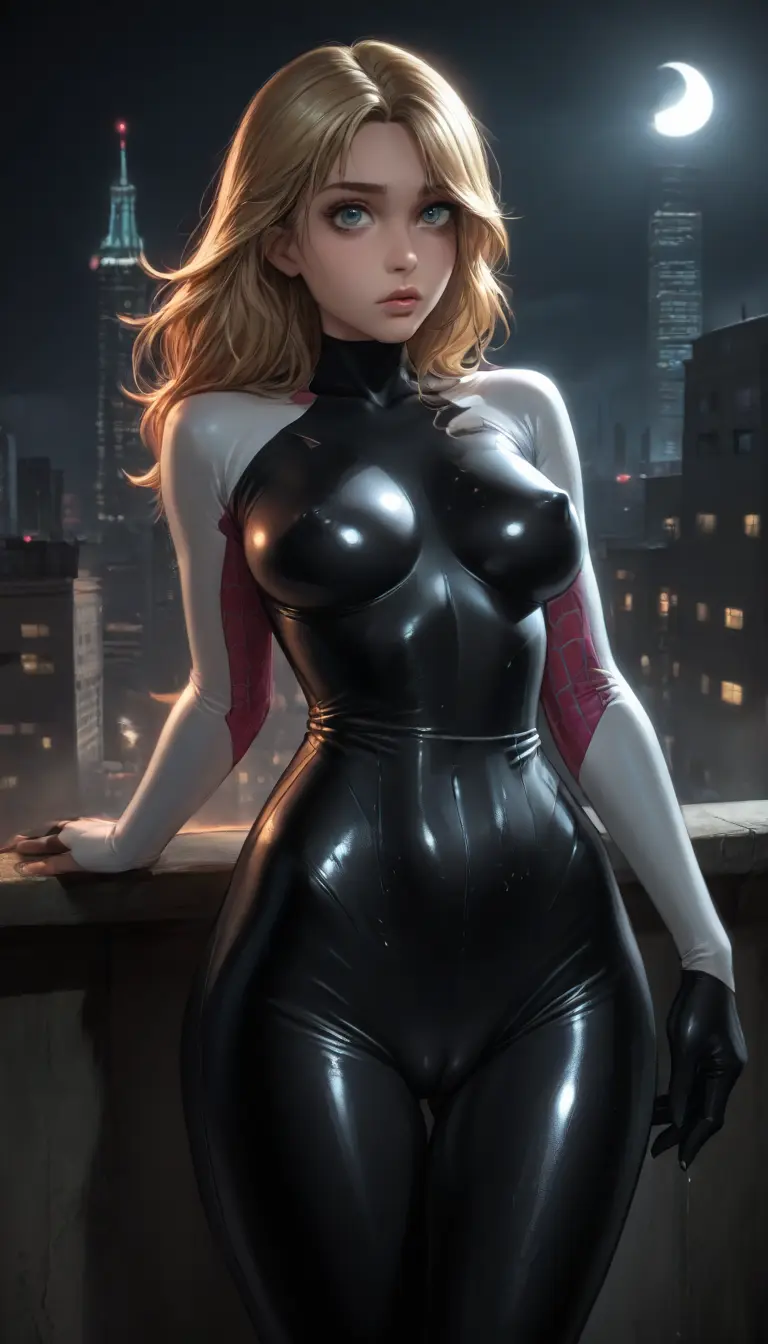
Reference stillUse a strong first frame or style still when you need composition, outfit, and mood to stay coherent during animation.

AI porn video generation lives or dies on clip consistency, camera control, face stability, motion strength, and privacy. Those are the checks that matter when you want usable adult clips instead of still images with random motion pasted on top.
Adult AI video has to solve more problems than a still-image tool because every frame introduces new failure points: face drift, broken hands, unstable clothing edges, melting backgrounds, inconsistent lighting, and unnatural motion. That is why a dedicated AI porn video generator should be evaluated as a production workflow rather than a novelty effect.
Still images can hide a lot. A single beautiful frame can look impressive even when the model would fall apart one frame later. Video removes that hiding place. The camera has to move or hold steady in a believable way, the subject has to stay recognizable, the background has to remain consistent, and the motion needs to feel deliberate instead of rubbery. If one part breaks, the whole clip looks cheap.
Video needs its own page because motion, scene continuity, aspect ratios, and rerender cost matter in ways still-image tools do not. Most users want short usable clips, not just one attractive frame.
The strongest setups usually revolve around two entry modes. Prompt-to-video gives speed when you want to explore different fantasies or visual directions. Image-to-video gives tighter control when you already have a still frame, key art, or character look that needs animation. In practice, users bounce between the two: create a still, choose the best frame, animate that frame, inspect the result, and rerender with a cleaner motion instruction.
When you compare adult AI video products, the useful questions are concrete:
Those details matter far more than a vague promise of realistic AI porn videos.
Reference-based generation is often the difference between random output and repeatable output. If you can anchor the clip to a still image, the system has a stronger chance of preserving composition, body orientation, scene mood, and facial identity while it adds motion.
Adult video lives or dies on facial coherence. If the eyes wander, the mouth distorts, or the identity changes between frames, the result stops looking premium immediately. Close-up stability is one of the clearest quality checks you can run.
Useful generators should let you move between photoreal, glossy fantasy, anime, stylized 3D, and softer cinematic directions instead of forcing one fixed aesthetic.
The Undress AI ecosystem already exposes policy pages such as Privacy Policy, Content Policy, 18+ Notice, DMCA, GDPR, and Zero-Tolerance Policy from the image side. For video, users should verify the same privacy and enforcement layer before uploading anything sensitive. Clear rules are a feature, not an annoyance.
One of the fastest ways to waste generations is ignoring format. Portrait clips for shorts, landscape clips for site headers, and square clips for social teasers each need different framing. Clip length also matters: shorter scenes usually hold together better than long, overloaded shots.
Start small. A short, controlled scene with one subject, one camera direction, one lighting setup, and one motion idea will usually outperform a chaotic prompt that tries to animate everything at once.
Think like a director, not a term spammer. Choose the shot type, define the adult subject, specify what moves and what stays stable, decide whether you need a loop, and only then press generate. Most broken outputs come from vague prompts or too many simultaneous instructions.
Try the official workflowDefine the subject as an adult, choose the room or location, set the camera distance, and pick a style. If identity matters, start from a still image or keyframe instead of pure text. Video quality improves when the foundation is stable before motion begins.
Use clean movement language such as slow push-in, subtle breathing, slight head turn, soft hair movement, gentle hip shift, or locked camera. Stronger motion can work, but it raises the chance of face drift, hand errors, and environment collapse.
Check first-frame quality, mid-clip identity, last-frame stability, lighting continuity, finger count, body geometry, and whether the background is moving for the right reasons. Keep the clean version, delete the broken one, and rerender with smaller changes.
Strong prompts read like production briefs. They describe the adult subject, the shot, the motion, the atmosphere, and the boundaries. They do not rely on generic adjectives alone.
| Control | What to specify | Why it matters | Example |
|---|---|---|---|
| Subject | Adult age cue, body type, hairstyle, expression, and whether the subject is fictional | Clarifies legality, identity, and the visual anchor of the scene | fictional adult woman, 25, blonde bob, soft eye contact |
| Camera | Close-up, medium shot, full body, locked frame, slow push-in, pan, orbit | Camera language changes realism and stability more than most users expect | medium shot, slow push-in, camera locked on face and torso |
| Motion | Breathing, head turn, hand movement, hip shift, hair movement, loop return | Specific motion is easier to animate cleanly than abstract excitement words | subtle breathing, slight shoulder roll, gentle hair motion |
| Environment | Room, props, depth, background behavior, time of day | Background drift is easier to detect when the prompt does not define the set clearly | dim bedroom, warm lamp light, shallow depth of field, static background |
| Lighting | Soft key light, neon rim, candle glow, moonlight, contrast level | Lighting keeps skin and facial structure readable from frame to frame | soft amber side light, realistic skin texture, low contrast shadows |
| Style | Photoreal, anime, glossy fantasy, 3D render, cinematic realism | Style sets how the model treats texture, depth, eyes, and motion smoothing | photoreal cinematic realism, high detail, natural motion |
| Negative prompt | Minors, celebrities, real people, extra limbs, flicker, warped hands, text, watermark | Negative prompts reduce common failure modes and reinforce safety boundaries | no minors, no celebrity likeness, no extra fingers, no flicker, no text |
A compact but structured format works better than dumping dozens of disconnected words into one line. A practical formula is: subject + age cue + scene + camera + motion + lighting + style + quality + negative prompt. That order forces you to think in layers instead of noise.
For example, a clean adult teaser prompt might look like this: fictional adult woman, 25, seated at the edge of a bed, medium shot, slow push-in camera, soft breathing and gentle head turn, warm bedside lighting, photoreal cinematic style, realistic skin texture, subtle motion, no minors, no celebrity likeness, no extra limbs, no flicker, no watermark.
If the first result feels unstable, do not immediately add more adjectives. First reduce motion, simplify the background, and tighten the camera. Cleaner structure usually beats longer prompts.
Portrait teaser: fictional adult woman, 24, close-up portrait, soft eye contact, slight lip movement, subtle breathing, static background, warm beauty lighting, photoreal, clean skin texture, no flicker, no text.
Noir rooftop: fictional adult woman, 27, rooftop at night, medium shot, moonlight and city bokeh, slow push-in, wind in hair, slight shoulder movement, cinematic realism, deep shadows, no extra limbs, no face drift.
Anime loop: fictional adult anime character, 22, bedroom scene, gentle head tilt, soft blink loop, pastel light, locked camera, high detail anime shading, seamless loop behavior, no text, no distortion.
The best use cases are the ones where speed, privacy, and short-form motion matter more than full live-action realism.
Short AI video loops can work as headers, preview tiles, teaser banners, and hero backgrounds where a still image feels flat but a full long video would be too heavy. This is especially useful for adult offers that need a clear hook within the first second.
Some users do not want a large content library. They want a specific mood, a specific adult character type, or a particular scenario visualized privately. A short prompt-based clip can deliver that faster than browsing or commissioning custom media.
Adult creators and subscription brands often need motion graphics for previews, cover animations, and launch promos. An AI porn video generator can help fill those slots quickly, especially when the output is used as a short attention hook rather than a full finished scene.
Video AI is also useful as a planning tool. A creator can test lighting, pose logic, visual tone, and character direction before spending time and money on a full production pipeline. Even imperfect clips can be valuable when the goal is previsualization.
Motion multiplies errors. A clip with a subtle head turn, soft breathing, and controlled camera push usually looks better than a clip that tries to combine dancing, wardrobe transformation, large body movement, hair physics, background motion, and camera orbit in one pass.
This is not a limitation unique to one brand. It is a category-level truth. The more moving parts you add, the harder it becomes to preserve face identity, finger count, body geometry, object permanence, and realistic lighting across frames. That is why advanced users often build longer sequences by stitching together multiple short shots instead of forcing one generation to do everything.
If you care about realism, treat the tool like a scene generator, not like magic. Lock one good moment, then build from there.
Compare the workflowThe first pass is never the only pass. Review the opening frame, the midpoint, and the ending separately. Ask whether the face still looks like the same person, whether the hands and shoulders still make anatomical sense, whether the wardrobe edges stay coherent, and whether the background is stable instead of dissolving.
Then check motion logic. Does the camera movement feel intentional, or does it look like drift? Does hair react naturally, or is it melting? Does the lighting remain consistent as the subject moves? These are the differences between a clip that works as a teaser and one that feels obviously synthetic.
The biggest difference is not only censorship. It is workflow alignment. Dedicated adult tools are built around the scenes people actually try to generate, while generic video tools often struggle or block the request entirely.
| Feature | Dedicated Adult Video Generator | Typical Generic AI Video Tool |
|---|---|---|
| Adult prompt support | Designed for fictional 18+ scenarios under policy rules | Often blocked, softened, or refused entirely |
| Reference-based erotic scenes | More likely to support style or character continuity workflows | Often less predictable when the prompt becomes explicit |
| Loop and teaser creation | Better aligned with short promo clips and erotic micro-scenes | Built more for general-purpose visuals than adult promo work |
| Moderation clarity | Should clearly state limits on minors, consent, and real people | Rules may exist but are often opaque or inconsistently enforced |
| Privacy questions | Users usually get explicit policy pages to review before paying | Retention and storage language may be harder to audit quickly |
| Iteration efficiency | Usually better tuned for erotic scene prompts and fast rerenders | Users spend more time fighting filters or reframing the request |
Shorter shots are usually safer because the model has fewer opportunities to mutate the face, reshape the body, or reinvent the background. If your goal is a premium-looking teaser, coherence matters more than spectacle. Two strong short clips will usually outperform one long unstable clip.
That is also why rerender strategy matters. Instead of asking for an entirely new scene every time, keep the same composition and only change one variable: motion strength, camera path, facial expression, or lighting intensity.
Many AI video workflows focus on the visual clip first, then leave sound design, cutting, and final assembly to a separate editing step. Even when the generator produces a visually strong shot, it may still need trimming, looping, speed adjustment, or soundtrack work before it feels finished.
That is normal. A good output is not always the final asset. Sometimes it is the raw material for a cleaner teaser, header loop, or promo montage.
Close-ups with gentle motion, clean lighting, and clear focus tend to look more believable than wide shots with multiple moving limbs and deep environmental motion. If you need realism, design for the model's strengths instead of testing its breaking point on every render.
Natural motion words usually work better than dramatic action language. Subtle breathing, slight pose shifts, soft eye movement, and controlled camera drift often read better than aggressive choreography.
Even a private generator does not remove user responsibility. Before saving or sharing any result, confirm that the clip respects local law, platform rules, and all consent boundaries. Adult AI becomes risky when people treat generation speed as permission to ignore policy.
The safest baseline is simple: fictional adults only, no real-person likeness abuse, no minors, and no attempt to bypass moderation or legal limits.
Check whether the product offers prompt-to-video only or also image-to-video. If identity, composition, and character continuity matter, reference support is often worth more than a larger prompt box.
Check clip length, export format, aspect ratios, watermark rules, and whether the tool outputs something you can actually publish or repurpose. A good demo is useless if the export is too restricted.
Check privacy, moderation, and refund pages before paying. Adult AI platforms should make it easy to understand what is allowed, what is stored, and what happens if a clip or upload violates policy.
The most valuable questions are the practical ones: what the tool can really do, how prompt-to-video differs from image-to-video, how to control motion, what policies apply, and what to verify before paying for more usage.
An AI porn video generator is an adult-only system that creates short NSFW clips from prompts, still images, or reference frames. The useful versions focus on short-scene coherence, not just single-frame beauty.
Prompt-to-video starts from text and is good for fast exploration. Image-to-video starts from a still and is stronger when you need a specific face, pose, framing, or style direction to survive the animation pass.
Keep the scene short, simplify the motion, define the lighting, use a clear camera instruction, and add a reference frame if identity matters. Realism usually improves when you reduce chaos, not when you increase prompt length.
Shorter is usually safer. In this category, brief clips often look cleaner than long scenes because the model has fewer chances to drift. If you need a longer piece, build it from multiple short shots.
No. Safe adult AI use means fictional adults only. Real-person abuse, celebrity likeness exploitation, minors, and non-consensual scenarios are exactly the kinds of inputs serious platforms should block.
That can change over time. Some products offer free credits, previews, or limited watermarked generations, while others do not. Always verify the live offer on the product page before paying.
Check reference support, export rules, aspect ratios, watermark policy, moderation boundaries, privacy language, and refund terms. Those specifics tell you more than generic hype about realism.
Yes. Generated output does not remove privacy risk. You still need to understand how uploads are handled, what is stored, how moderation works, and what happens after export if you save or share the clip elsewhere.